Getting smarter,
faster and and build better
How conceptual building prepares housing for the future
The housing sector faces a major challenge: realizing more homes faster, without compromising on quality, sustainability, and affordability. More and more builders are seeking the solution in conceptual building. Instead of developing every project from scratch, they work based on proven housing concepts that are continuously improved.
By smartly combining standardization, digitalization, and collaboration, a construction process emerges that not only proceeds faster but also becomes increasingly predictable.
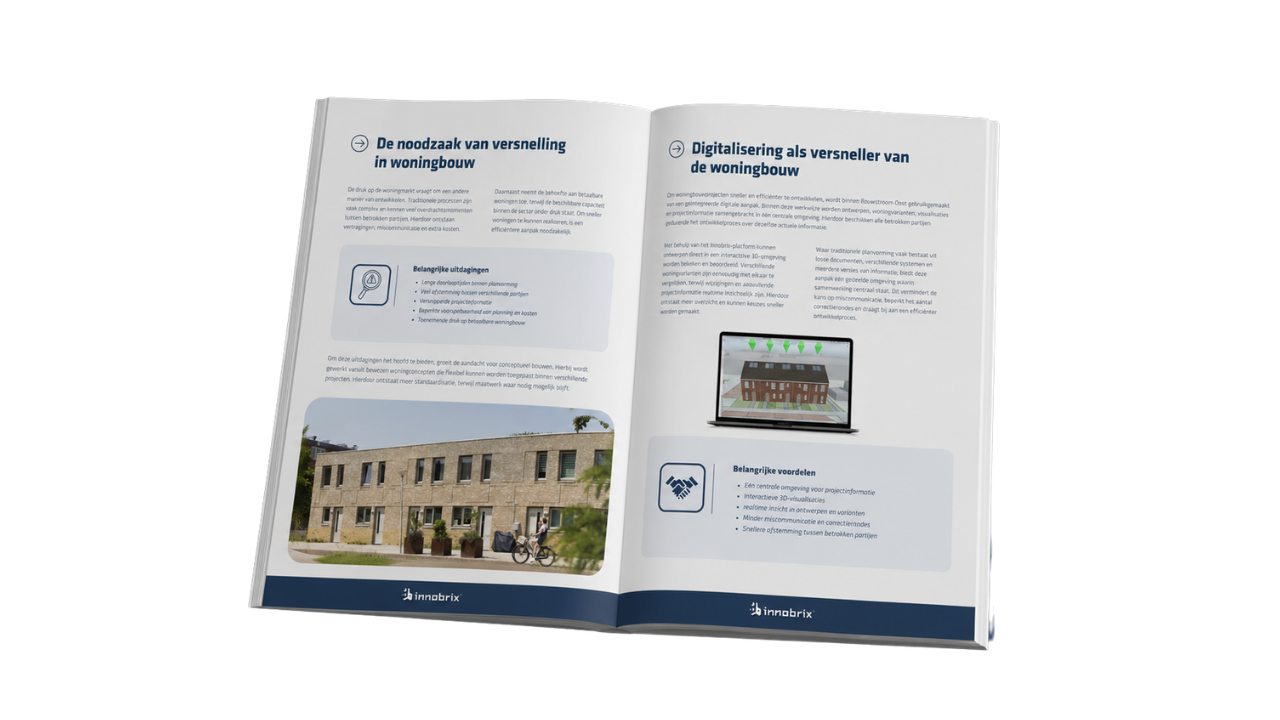
Construction Stream East
Conceptual building in practice
Curious how this is applied in practice? Discover in the white paper on Bouwstroom Oost how housing concepts, digitalization, and collaboration are being used to accelerate housing construction.
From customization to smart standardization
Whereas housing construction traditionally often started with a blank sheet of paper, we see a clear shift towards standardized and repeatable solutions. Modern housing concepts combine a standardized technical basis with sufficient freedom to give homes and neighborhoods a unique character.
Facades, colors, roof shapes, window frames, and other elements may vary, while behind the scenes, the same proven building blocks are used.
Smart standardization
A fixed digital foundation, with sufficient freedom to vary per project and location.
BIM as a digital foundation
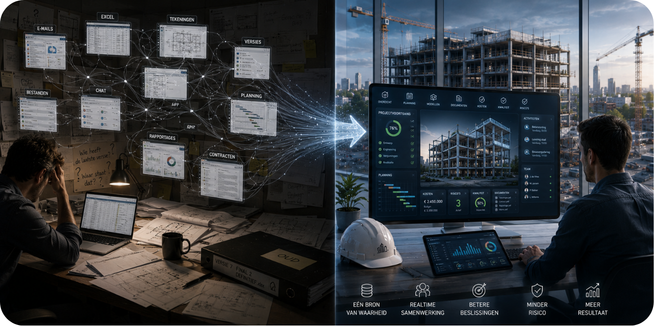
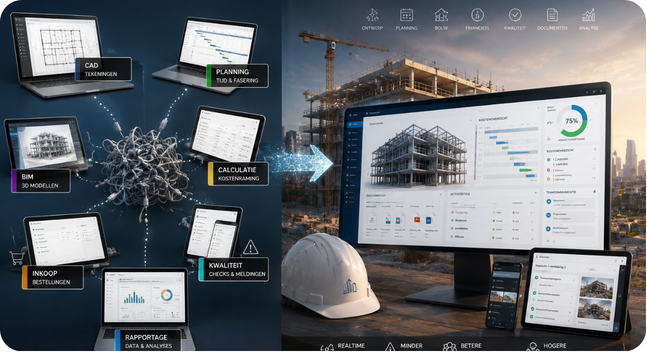
Digitalization plays an important role in the development of conceptual construction. With BIM, homes and building components can be digitally designed, engineered, and exchanged between various parties.
When this information is centrally available, data needs to be re-entered less frequently, and various disciplines can collaborate from the same digital base.
In this way, BIM is becoming more than just a technical 3D model. It is increasingly forming the digital basis for the entire process: from planning and cost estimation to sales, realization, and ultimately management.
Proven housing concepts
Knowledge from previous projects is not lost in conceptual building. Housing types and solutions are included in a digital library and can be applied again and again.
New insights regarding energy performance, circularity, climate adaptation, and nature inclusivity can be directly incorporated into existing concepts. This creates a continuous improvement process: every development not only improves the current project but also the projects that follow.

Improve continuously
Knowledge and innovations from each project are captured and reused in subsequent projects.
Collaborating within a single digital chain
Conceptual construction does not stop with the builder themselves. Suppliers, designers, consultants, and other partners also play an important role. Through long-term collaboration, parties can jointly develop, test, and improve solutions. This creates a chain in which knowledge is continuously supplemented and reused. As a result, new solutions and innovations do not need to be devised from scratch for every project, but can become part of an ever-evolving digital library.
Digitalization as the key
With digital housing libraries and configurators, housing types, variants, and options can be determined in advance. Subsequently, projects can be assembled, calculated, and visualized using these building blocks. When the same information is used for planning, engineering, presentation, and sales, a single digital foundation is created. This ensures not only greater efficiency on the backend but also better communication with clients, municipalities, housing associations, and future residents.
The benefits at a glance

Reusing proven solutions and knowledge.

Projects do not need to be developed entirely from scratch every time.

Apply innovations faster across multiple projects.

More control over quality, costs, and processes.
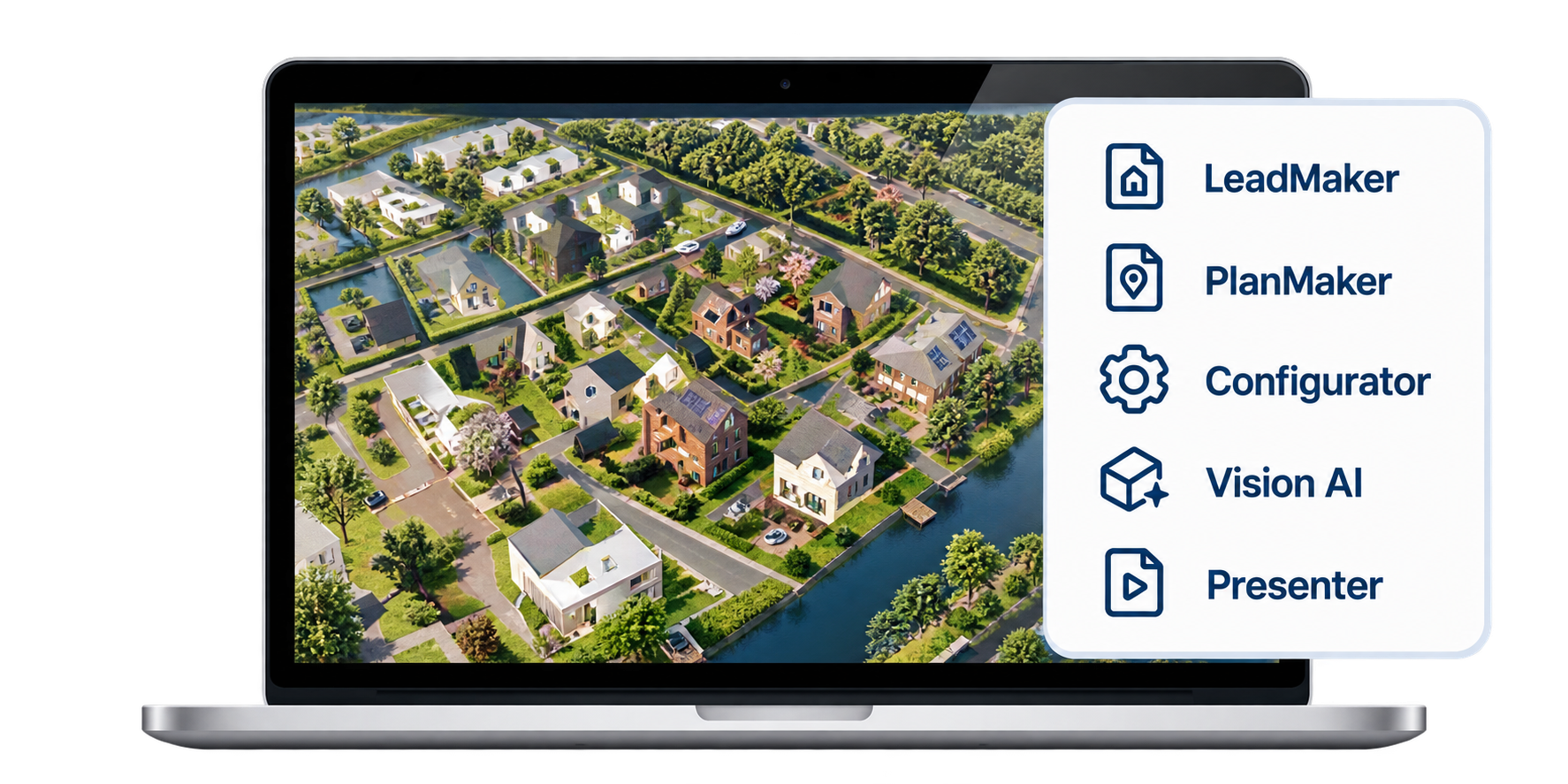
Bring your living concepts to life with Innobrix
With Innobrix, you turn BIM models and housing concepts into interactive 3D plans. Develop locations, assemble variants, and present your plans clearly to all stakeholders.